
What should you do if you find a baby bird that’s fallen from its nest? What if you encounter a coyote or mountain lion? How can you keep deer from destroying your garden?
Those are some of the questions Ashley Kinney answered on July 31 at a free program hosted by the Citizens Environmental Council called “Wildlife in Your Neighborhood.”
Ashley, who is Wildlife Rehabilitation Manager for the Peninsula Humane Society (PHS) and SPCA, has been working with wildlife for more than two decades. PHS recently merged with the Wildlife Center of Silicon Valley and will soon open the largest wildlife care facility in the nation in Saratoga. The organization now serves three counties: San Francisco, San Mateo and Santa Clara.
“We have hundreds and hundreds of wildlife needing care,” she said. During 2023, they treated more than 10,000 animals from 165 species.
Wildlife Rescues
Among their patients were an egret with a wing that was broken when it got entangled with a fishing line, a raccoon that fell into a storm drain, a group of Western bluebirds that got stuck in a glue trap (“We do not recommend glue traps,” Ashley said), and lots of baby squirrels separated from their mothers.
Wildlife volunteers get to help feed those babies after they complete training. They must be at least 16 years old, able to work one three-hour shift per week and make a one-year commitment, although some seasonable opportunities are available. Right now, PHS is only accepting volunteers for the Saratoga center.
How to Help
What should you do if you find a fallen baby bird? If it has feathers, Ashley said it’s a fledgling that normally spends three to seven days on the ground, hiding in bushes where its parents fly down to feed it. If it doesn’t have feathers, she recommends putting it back in the nest because the parents will take care of it. If the nest is falling apart, she said you can put it in a Kleenex box and hang it from a tree.
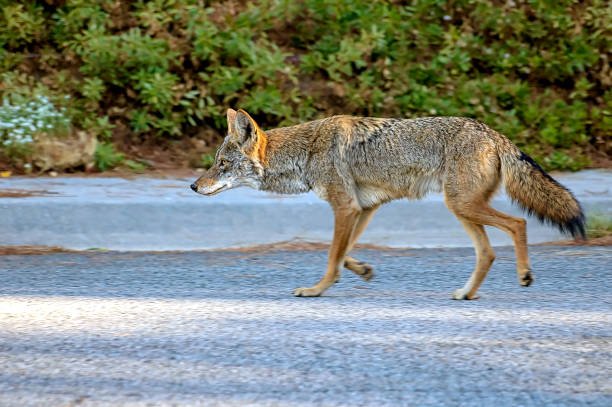
If you encounter a coyote or mountain lion, it’s important to make yourself look bigger by waving your arms and slowly backing away. The worst thing you can do is turn around and run. When you go on a hike, Ashley recommends taking mace or a can of pennies that you can shake to make a lot of noise. PHS will not pick up a coyote unless it’s injured. It refers requests for help with mountain lions to the California Department of Fish and Wildlife.
Gardeners have found that keeping plants in containers and covering them with mesh deters deer. Ashley said a cayenne pepper spray can cause deer to lose interest in flowers; it should not be used on edibles. One creative way to discourage deer is to surround the planted area with lights triggered by motion sensors. One gardener she knew installed mini-inflatable tube men around her garden that danced in the wind generated by a blower.
Wildlife Benefits
Ashley said wild animals offer many benefits that most people don’t know about. For example, opossums help reduce Lyme disease because they love to feast on ticks, raptors provide rodent control, and birds help spread seeds when they defecate.
To help protect wildlife, Ashley recommends:
- Keep bird feeders clean so they don’t transit diseases.
- Keep dogs on leashes whenever you take them for a walk.
- Keep cats inside.
- Keep garbage in proper containers so it doesn’t attract animals.
- Prevent bird strikes by putting decals on your windows.
Helpful Information
The PHS website is https://phs-spca.org. If you find a sick, injured or orphaned wild animal in San Francisco, San Mateo or Santa Clara County, call 650-340-7022. From 9 a.m. to 6 p.m. daily, you can drop off injured wildlife at PHS’ Center for Compassion at 1450 Rollins Road in Burlingame. After hours, you can leave animals in the receiving kennels at PHS’ Coyote Point shelter at 12 Airport Blvd. in San Mateo and they’ll be transferred to the Lantos Center the next day.
PHS’ South Bay Rehabilitation Center at 3027 Pentencia Creek Road in San Jose does intake from 8 a.m. to 6 p.m. daily. When it opens, the Saratoga center will offer 24/7 intake service.
Wildlife care is offered 24/7 by the Veterinary Emergency Group, 75 Ridder Park Drive, Suite 85, San Jose; 408-834-8180; veterinaryemergencygroup.com.
Wildlife Detectives offers humane, nonlethal removal of wildlife from homes and businesses. It serves the entire Bay Area and specializes in solving problems with raccoons, skunks, bats, foxes and other wildlife; 415-526-3393; wildlifedetectives.com.
Contact the California Department of Fish and Wildlife to report illegal poaching and cruelty to wildlife; 916-358-1312; wildlife.ca.gov.
The Hungry Owl Project helps owls survive through the conservation of habitat, nesting boxes and education. It sells owl nesting boxes and offers directions on how to build one; hungryowls.org; for emergencies, call 415-456-SAVE.